
Voice Agent Latency: Why Half a Second Decides the Call
Voice agent latency decides whether a call feels natural. Where does the delay come from, how does the caller read it, and what can be done?
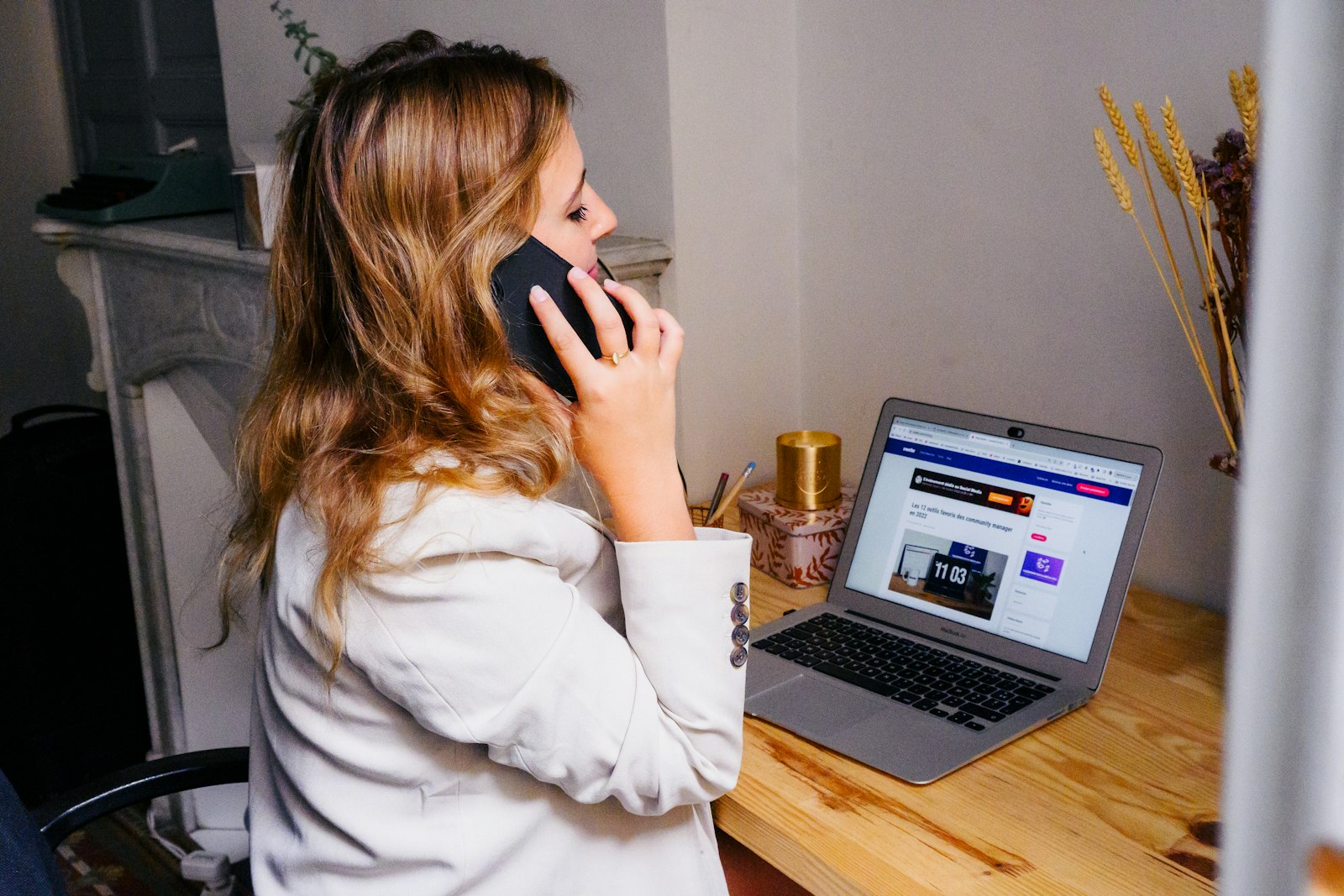
Voice agent latency is the most concrete factor deciding whether a franchise candidate finds a call natural or robotic. People notice silences longer than roughly a third of a second in conversation and read them as the other side is not listening.
Latency is therefore not a technical detail hidden in a dashboard. It is the first impression of the call, formed before anyone has said anything of substance, and it colours everything the candidate hears afterwards.
Why does latency matter this much?
Because conversation delay on calls hits exactly where human hearing is most sensitive: the moment of turn taking. Between two people a pause is thinking time; with a voice agent the same pause becomes the question of whether the system has crashed.
A franchise candidate is already hesitant and still deciding. A small delay can turn into an early judgement about the technical maturity of the brand rather than about the system itself.
That first judgement is hard to reverse. Once someone has decided the system is slow, later fast answers do not fully erase the impression.
How does the caller experience the delay?
The caller experiences latency as a feeling, not as a number; nobody counts seconds, they simply feel uncomfortable. Short pauses usually pass unnoticed while longer gaps create the sense of being kept waiting.
The effect accumulates. One delay at the start of a call can be forgiven, but after it repeats three or four times the caller begins to drift out of the conversation.
On a phone line there is no visual feedback, so the only clue available to the caller is the waiting time itself. This makes the voice channel more sensitive than a video call.
For the caller, latency is not a measurement. It is the moment they feel they are not being heard.
For that reason latency should be measured not only as an average but at the worst end of the distribution. An average can look healthy while a single bad moment ruins the call.
Where in the chain does the delay come from?
Latency does not come from one place; it accumulates across four steps: speech recognition, model processing, answer generation and speech synthesis. Each step adds its own share and the sum is what the caller feels as voice ai response time.
Saying the agent is slow is therefore not a diagnosis. Whether the problem sits in the telephony link, in model processing or in speech synthesis has to be seen separately.
Each of the four steps may belong to a different team or vendor. Fixing latency is usually less about a single technical change and more about coordination between those steps.
| Step | Typical source of delay | Effect |
|---|---|---|
| Speech recognition | Background noise, accent, line quality | Wrong transcript, asking again |
| Model processing | Complex question, long context | Waiting before an answer forms |
| Answer generation | Model size, server load | The most variable source |
| Speech synthesis | Sentence length, voice quality setting | Time before speech starts |
The four rows add up to a single duration in the caller's ear. Improving each step separately is the only way to protect natural conversation flow overall.
Does the telephony connection affect latency?
Yes, because audio travels between the exchange and the agent over a network and every hop adds a small amount of time. Exchange configuration, codec choice and network path form a real share that stays invisible in most dashboards.
Network latency is usually a fixed cost and cannot be compensated by improvements on the model side. Choosing the telephony path therefore sets the ceiling for your response time target from day one.
The role of speech recognition
Speech recognition latency grows when the language is morphologically rich or the speaking pace is fast. A misheard word makes the agent ask again, and asking again costs far more than the recognition delay itself.
Accuracy is therefore an invisible component of latency. A model that hears correctly the first time is faster in practice than a quicker model that mishears.
How is natural conversation flow preserved?
Natural conversation flow does not come from eliminating latency but from shaping it to resemble the pauses of human speech. Even a short acknowledging sound while the answer forms changes how the pause is read.
- Generate the answer in parts and start speaking early (streaming)
- Bridge silences with short, honest filler phrases
- Prefer short, clear answers over long sentences
- Prepare frequently asked scenarios in advance
All of these serve one goal: the caller should never feel lost while waiting for the next sentence. Natural conversation flow is a design decision, not a coincidence.
Techniques like streaming only work if the engineering team measures each step. Otherwise a gain in one place is hidden by a loss in another.
Is there a trade-off between latency and cost?
Yes. Faster answers usually require stronger and more expensive processing capacity, and the balance is set differently in every system. There is no single correct answer here.
Some teams chase the lowest possible latency on every call and lose sight of the bill. The response time target should be set where the expectation of the network meets the budget.
How does latency affect call quality?
High latency does not only create discomfort; it causes data loss. The caller grows impatient, changes the subject or hangs up early, and the information you could have gathered stays incomplete.
The first sentences of a candidate are usually the most critical moment of the call. A delay there leaves a lasting impression that colours everything said afterwards. The same is true of what the caller is told at the opening, which is covered in the article on call transparency.
Early call data is also valuable for catching latency problems before they become a pattern. The first days of a deployment tell you more than any synthetic test.
How should latency be measured?
Latency should be measured with real call data over time, not with a single test conversation. Average, median and the highest percentile need to be watched together.
- 1.Record the duration of each step separately: recognition, model, synthesis
- 2.Look at the worst percentile rather than the average
- 3.Test under different network conditions, mobile and fixed line
- 4.Sample real caller data regularly rather than once
Without these measurements any discussion about voice agent latency stays speculation. Improvement is not possible without a number to improve.
How do recordings relate to latency?
Investigating latency after the fact requires call recordings and timestamps. Which step lost time in which moment cannot be guessed without a record of it. What has to be kept for that investigation to be possible is covered in the article on audit trails in voice AI calls.
An audit trail is what turns a complaint about slowness into a solvable engineering problem. Without it the discussion stays anecdotal and nothing changes.
What should be done in practice?
Managing latency is not solved by a single setting; every step in the chain has to be measured and improved. The right approach starts with knowing which step costs the most time.
Teams evaluating a voice agent for a franchise network should explicitly ask the vendor for response time figures and the measurement method. A system that gives no numbers leaves you without control over this dimension.
Whether the system is an off-the-shelf product or a custom build also changes the answer, because the steps you can influence differ in each case.
Want to see what is inside your own calls?
Callsense makes the intent, the objection and the next step in a conversation visible. A scoping call takes 30 minutes and needs no technical preparation.
Book a scoping call